Codes of Conduct Are the Root of All Evil: Reclaiming Your Freedom
Every major open source project today ships with a CODE_OF_CONDUCT.md in the repository. The idea was sold that this existed to “protect minorities” and “create safe spaces.” In practice, what I watched happen over the last decade was something else: an instrument to cancel, persecute, and ban anyone who thought differently from whoever was in control. And the people leading those hunts, as a rule, were not the ones maintaining the projects’ code.
This is my thesis, and I know it’s unpopular. It took me ten years of patience to be able to write this piece. I stayed quiet watching this theater repeat itself year after year, waiting for the right moment to document everything I witnessed up close, and today I get to watch, with real pleasure, my own predictions come true one by one.
And before some smart aleck tries this one: I know boycotts, doxxing, and witch hunts exist with no CODE_OF_CONDUCT.md whatsoever, they always have. The title takes aim at what this file turned into: the instrument that took an internet-mob tactic and stamped it as official project policy, with a committee, a process, and a veneer of institutional legitimacy. A 500-line markdown file scares nobody by itself; what it became does.
Easy money was the fuel. The code of conduct was the weapon these people built to formalize what used to be just a shout in the street.
One question is where the energy came from; another is the instrument it adopted to turn into permanent power inside the project. Keep that distinction in mind, because it holds up the whole piece. But before getting to the philosophy, let me tell the economic part, because without understanding the money you won’t understand the rest.
The bubble that funded all of this
From roughly 2012 to 2022, the tech industry lived through the biggest hiring bubble in history. Zero interest rates, infinite capital, and big tech companies growing like there was no tomorrow. We reached the surreal point of companies hiring engineers with no work for them to do. Keith Rabois, of the PayPal mafia, publicly accused Google and Meta of hiring thousands of people to do “fake work”, out of vanity, and so they wouldn’t go work for competitors. A former Meta employee, laid off in the first 2022 wave, put it better: “they were hoarding us like Pokémon cards”. The “rest and vest” culture, collecting salary and stock options while doing almost nothing, had already been documented back in 2017.
It was this bubble that funded the “coding is the profession of the future” wave. Bootcamps went from 2,178 graduates in 2013 to nearly 25,000 in 2020 in the US and Canada alone, growth of more than a thousand percent. Bloomberg resolved to learn to code as a New Year’s resolution in 2012. Obama wrote a line of code on TV in 2014.
I told this story in more detail in a February 2020 video, back when the bubble was still inflating (transcript here):
Tech influencer became a profession. Everyone was going to be a programmer.
Then the bubble popped. 2022: nearly 165,000 laid off. 2023: more than 262,000, according to Layoffs.fyi. Meta cut 11,000 in November 2022 with Zuckerberg admitting “I got this wrong”, and another 10,000 in the “year of efficiency” in 2023. Amazon cut 27,000. Google, 12,000, with Pichai admitting that “we hired for a different economic reality than the one we face today”. Stripe was the most honest: “we overhired”.
I recorded that burst in the heat of the moment, in a November 2022 video (transcript here):
And because the timing writes its own joke, on November 30, 2022, right in the middle of the bloodbath, ChatGPT came out. A hundred million users in two months, the fastest-growing app ever seen up to that point, according to a UBS estimate. The headlines turned into an ACM talk called “Large Language Models and the End of Programming”, Jensen Huang saying no child needs to learn to code anymore, Devin announcing itself as the first AI software engineer, Dario Amodei promising AI would write 90% of code within three to six months. Spoiler: it didn’t.
Why does this story matter? Because it was exactly during this decade of easy money that open source got colonized. When there’s money to spare and a shortage of real work, there’s time and people to spare for playing politics inside projects. And that’s what happened.
The decade of the witch hunt
The central artifact of this story is the Contributor Covenant, created in 2014 by Coraline Ada Ehmke and adopted by thousands of projects, including practically every giant in the industry: CNCF, Apple, Google, Microsoft, Linux. The author herself, on the day Linux adopted her code, tweeted in no uncertain terms: “Some people are saying that the Contributor Covenant is a political document, and they’re right”. When the document’s own author admits it’s political, the debate over “safe space” is over before it starts.
The list of victims from this era is long, so let’s get to the main ones.
First, it’s worth noting how far this crowd’s reach went. Coraline worked at GitHub between 2016 and 2017, until she was let go (her version of events is in the piece “Antisocial Coding: My Year at GitHub”). And GitHub was the perfect target: it’s where practically all the world’s open source lived. It was in this era that the original founders left the picture. Tom Preston-Werner resigned in 2014 amid the Julie Ann Horvath harassment scandal, even though the internal investigation concluded there was nothing illegal, only “errors in judgment.” Chris Wanstrath had already announced he’d step down as CEO in 2017 and, after the sale to Microsoft in 2018, stayed on a few more years as a technical fellow before leaving for good. Today none of the original founders work there.
Her legacy outlived the firing. The Contributor Covenant became one of the templates GitHub makes easy to adopt when you create a repository’s CODE_OF_CONDUCT.md. And in 2020 came the crown jewel: in the middle of the George Floyd protests, GitHub announced it was retiring the name master, and since October 1, 2020 every new repository is born main.
The debate was stupid from the start. Git never had a slave branch. Petr Baudis, who named it in the original scripts, explained on X that master there came from “master copy”, like the master recording of an album (Baudis himself later said he now prefers main; the etymology hasn’t changed). Not even that detail held back the change: even the Software Freedom Conservancy publicly endorsed the switch, and anyone with automation assuming master had to scramble to catch up. Nobody got any more protected because of this change, but it’s there, in every programmer’s workflow, every single day.
Brendan Eich, 2014. The guy invented JavaScript, co-founded Mozilla, was CTO since 2005. He became CEO and lasted eleven days in the job. The crime: a thousand-dollar donation in 2008 to California’s Proposition 8. Employees tweeted calling for his head, OkCupid blocked Firefox users with a protest message, and he fell. Andrew Sullivan, gay and one of the first prominent advocates for same-sex marriage, wrote at the time “The Hounding of a Heretic”: when careers depend on an ideological purity test, the witch hunt has already won. And notice: there was no code of conduct involved here at all, it was pure boycott pressure. The method already existed before the document; the document only made it official.
Larry Garfield, 2017. Twelve years contributing to Drupal. When it leaked that he took part in a BDSM subculture, on a private site, outside the project, Drupal’s conduct committee investigated and concluded: no code of conduct violation. Dries Buytaert went over the committee’s own head and expelled him anyway, because “association with his belief system” was incompatible with the project’s goals. TechCrunch summed it up the same way: punished for something said outside the project. Eighty-five developers signed an open letter threatening to leave. It didn’t help. And notice the detail that buries the “safe space” thesis: the code of conduct process worked and cleared the guy. When the mob pushed, the paper held nothing; the person at the top decided, like it always was.
Node.js, 2017. The 13-person TSC voted on expelling Rod Vagg for, among other things, having tweeted an article questioning the side effects of codes of conduct. Reading criticism of a code of conduct almost became a code of conduct violation: the vote was 6 to 4 against expulsion, by a narrow margin. The machine lost that round, but the message had already gotten out: four of the people who wanted Vagg’s head resigned from the committee that same day, and the project got a fork called Ayo.js hours later. Losing the vote didn’t stop the damage.
Linus Torvalds, 2018. In September, according to reporting at the time, the New Yorker had sent him questions about his abusive behavior in emails. That same weekend, Linus apologized and announced he’d take some time off to “understand people’s emotions” and the kernel swapped the Code of Conflict for the Contributor Covenant. Linus has been blunt in emails forever, everyone knows that, and he came back a month later. But the message was sent: if not even the guy who created the kernel was safe, nobody was.
Richard Stallman, 2019. The creator of the GPL, founder of the FSF, the embodiment of free software. An MIT mailing list thread leaked in which he discussed the legal semantics of the Minsky/Epstein case. Vice ran headlines saying he had “defended Epstein” and called the victims “entirely willing”, a reading the email thread itself doesn’t support: he was questioning the legal terminology of the accusation against Minsky. The “Remove Richard Stallman” campaign exploded, and within days he resigned from MIT and the FSF presidency. When he returned to the FSF board in 2021, an open letter with more than 3,000 signatures and dozens of organizations came out demanding his head and the whole board’s. Red Hat cut funding to the FSF. A support letter gathered nearly 7,000 signatures and, delicious detail, Debian voted on a resolution about the case and the winning option was to say nothing. Even faking neutrality took a vote.
And there’s the most recent case, and maybe the most instructive one: Tim Peters, 2024. A Python legend, three decades of contribution, suspended for three months by the PSF’s conduct committee over vague accusations of creating an “atmosphere of FUD”, in a fight over the foundation’s bylaws and the committee’s own methods. The community reacted badly, but there was no reversing it: he served the three months and only came back once the suspension expired, in November. The pattern held: disagreeing with moderation became a punishable offense.
DHH, 2021. I saved this one for last because it’s the case that changes the story. And note: this wasn’t even open source, it was his own company. The same mechanism, now inside the office. In April 2021, at the height of the BLM era, an internal DEI committee inside Basecamp, the company of Ruby on Rails’ creator and Jason Fried, dug up an old “funny customer names” list that had been circulating internally. The discussion escalated until an employee invoked the “pyramid of hate” and argued that list was the foundation of racial violence and even genocide. The founders’ response was to shut down the topic, dissolve the committee, and ban political and societal discussion on internal channels. The internet exploded. At the next all-hands, there were two and a half hours of people crying and yelling on Zoom. Ryan Singer, eighteen years at the company, said there that he didn’t accept the “white supremacy culture” label being applied to the company. He was suspended half an hour after the meeting and resigned that weekend. In the end, a third of the company, twenty of the 57 employees, left with a voluntary severance package.
And this is where this case splits off from all the others: he didn’t bend. No public humiliation ritual, no apology, no walking it back. He preferred to lose a third of the company over handing over control of it. Basecamp survived, went back to being 37signals, and DHH learned right there, firsthand, what kind of people he was dealing with. Hold on to that name, because it comes back.
Someone’s going to point out that his rule is also a written document banning a topic. Yes, and the difference is exactly the point: DHH’s rule bans an entire subject, the same for everyone, no matter which side. A code of conduct bans a person and an opinion, selectively, depending on who’s in power that month.
One locks the topic at the door. The other opens a courtroom inside.
Notice the pattern. In none of these cases was the problem code. In none of them did anyone commit a bug, steal code, sabotage a release. The offenses were opinions, political donations, private life, semantics on a mailing list. The technical criterion got replaced by a political one, and the code of conduct was the legal instrument of that swap. These are famous cases, not statistics. But when the list includes the creators of JavaScript, the GPL, and Linux, the sample doesn’t need to be big to make the point.
And the results?
Ten years of the code-of-conduct era should have left behind a trail of good numbers. If the justification was protecting minorities and making open source more diverse and less toxic, where’s the improvement? I went looking for the serious research on the subject. What exists tells an interesting story.
On adoption: Tourani, Adams, and Serebrenik measured in 2017 that around 35% of GitHub’s 150 most popular projects had a code of conduct. And that enforcement was rare: the creators of these codes, in a sample of four interviewees, talked about single-digit case counts over years. A 2021 CSCW study looked at 52,000 repositories: 12.6% had a CoC, and only 10% of the conversations mentioning the code were real moderation use of it. Most adoptions happened with no visible public discussion in the repo. The same paper states, in plain words, that there is no empirical evidence that a code of conduct attracts new contributors.
On attracting people, by the way, Qiu et al. measured what actually makes someone join a project: a good README, star count, recent activity, an issue template. A code of conduct didn’t even make it in as a variable in their model, and note that they did test maintainer responsiveness, which also came back not significant. The study that specifically measured where a CoC ranks among the factors was a separate one, Fronchetti, Wiese, Pinto, and Steinmacher, also from 2019: a CoC ranked among the worst-placed factors for attracting new contributors. Nobody picks a project because of its code of conduct.
On diversity, which was the original promise, there is a specific study, and the answer is no. Robson, at ESEC/FSE 2018, looked at GitHub’s 500 most popular projects: projects that adopted a CoC saw women’s participation grow at practically the same rate as those that didn’t (roughly a 1.44% increase versus 1.43%, per the later survey that cites the study). No statistical difference to back up the promise. Enache, in a 2017 master’s thesis for TU Eindhoven, covering 149 open source communities, reached the same conclusion: no significant result showing a CoC changes women’s participation.
And there’s a new, heavyweight piece of research, published now in 2026 at ICSE, the field’s most important conference: Sun et al. ran a genuine causal experiment, comparing 4,684 pairs of repositories that adopted a CoC against matched pairs that didn’t. The result cuts both ways. Adopting a CoC does attract more new contributors, and that effect grows over time. Except adopting a CoC also increases the number of existing contributors who disengage, an effect concentrated specifically in the first one to three months after adoption. In other words: the most recent and most rigorous study that exists shows, with numbers, the exact pattern this piece has been documenting case by case the whole time. Adopting the document doesn’t build a new community, it pushes out the people who were already there.
GitHub’s 2017 survey already showed 95% men and 3% women in open source. The best long-term data that exists, from Rossi and Zacchiroli at ICSE 2022, analyzed 2.2 billion commits from the Software Heritage archive. Gender was detectable for 64% of authors, and within that group, women are 13.5% of authors and sign 8.1% of commits. Their participation had been growing slowly and steadily for twelve years, and dropped during the pandemic. The paper doesn’t discuss codes of conduct, so what follows is my own reading, not the study’s: a curve that climbs the same way the whole decade, with no visible step up when the Contributor Covenant spread, is the opposite of evidence that the document made a difference.
On toxicity, the ICSE 2022 study finds, in a footnote and by extrapolation, something close to 1.3 toxic comments per thousand on GitHub. Nobody has a historical series comparing before and after the CoC era. There simply is no baseline to say whether things got worse or better.
The only randomized experiment that would actually support the case for rules is Matias’s, published in PNAS in 2019: rule reminders actively displayed on a randomly-sampled set of r/science threads increased newcomer participation by 70%. Except the experiment is on Reddit, with the rule pinned right in front of whoever walked into that specific thread. A static file forgotten in a repository, that nobody reads after adoption day, doesn’t come close to that. The very research that shows a rule working is proof that the problem was never whether the file exists or not. It’s that nobody enforces it, nobody displays it, nobody makes it stick.
To sum up: a whole decade of codes of conduct, and the original promise remains exactly that, a promise. What got documented was adoption without discussion, rare enforcement, and, at best, a whole lot of political process.
As protection, it’s almost never invoked. As a political weapon, it only needs to be invoked once, against the right person.
The pushback came from where nobody expected
Easy money ran out in 2022, and with it, the industry’s patience for this theater. And leading the pushback was the guy who had already refused to bend back in 2021: DHH, an old-guard ex-Mac fanboy.
DHH has been writing against this wave for a while now: “The waning days of DEI’s dominance” in 2022, “DEI is done” in 2024. In 2022 Ruby Central pulled him from the RailsConf keynote, the conference for the framework he himself created, saying it wanted to “share the opening stage with other contributors”. The following year Rails World was born, the official Rails Foundation conference, and DHH became its keynote speaker. In 2024 he launched Omakub, and in June 2025, Omarchy: Arch Linux with Hyprland and a bunch of opinionated scripts on top, which had passed 40,000 stars on GitHub by September 2026 and became 37signals’ default environment for anyone touching infra and Ruby.
Then the cancel machine switched on again. In September 2025 he published “As I remember London”, and the reaction was the usual script: a petition to remove him, accusations, an attempted boycott. His response was “We’ve all had enough of this nonsense”: “every few years, the same sad little clique of Ruby malcontents tries to cancel me from Rails”.
A month later, in October 2025, it was Framework’s turn, the laptop maker: a thread with more than 1,500 replies on the company’s own forum, opened by a Debian developer calling the Hyprland community, which Framework sponsored, “toxic and hateful,” and threatening a boycott because the company also promoted Omarchy on social media. The Framework CEO’s response is the line this whole decade had been missing:
“We deliberately created a big tent, because we want open source to win. We don’t partner based on the beliefs of individuals or organizations.”
And the machine didn’t just come after him. Ruby Central, the same organization that had disinvited DHH from the keynote in 2022, gave him a stage at RailsConf 2025. The retaliation came in money: according to developer Joel Drapper’s reporting, Sidekiq pulled its $250,000-a-year sponsorship because of it. Weeks later, in September 2025, Ruby Central stripped GitHub access from every longtime RubyGems and Bundler maintainer, citing supply-chain security. Ellen Dash, who had maintained the project for ten years, quit, calling the move a “hostile takeover,” and Drapper’s investigation points to pressure from Shopify, which had become practically the organization’s only source of money. Ruby Central itself ended up publishing an incident report in April 2026, promising to “strengthen governance.” That’s the whole pattern: when the machine can’t take the target down, it burns the house down around them.
A GNOME developer published a piece attacking Omarchy on GNOME’s official blogs site. And the result of all that fury? Nothing. In August 2026 the Omacom Foundation was born, with eight million dollars at launch: a million each from Tobi Lütke (Shopify), Patrick Collison (Stripe), Michael Dell, Jack Dorsey, Matthew Prince (Cloudflare), Brendan Iribe, Jason Fried, and DHH himself. The foundation became Hyprland’s exclusive sponsor, with Vaxry working on it full-time. When 1Password came in as a sponsor, the cancellation attempt was immediate, and so was the CEO’s internal response: “our donation is not an endorsement of personal opinions”. And the game goes on.
And I put my money where my mouth is: I made my donation to the foundation precisely because of the patrol’s whining. Nothing irritates that crowd more than watching a cancellation fail in real time.
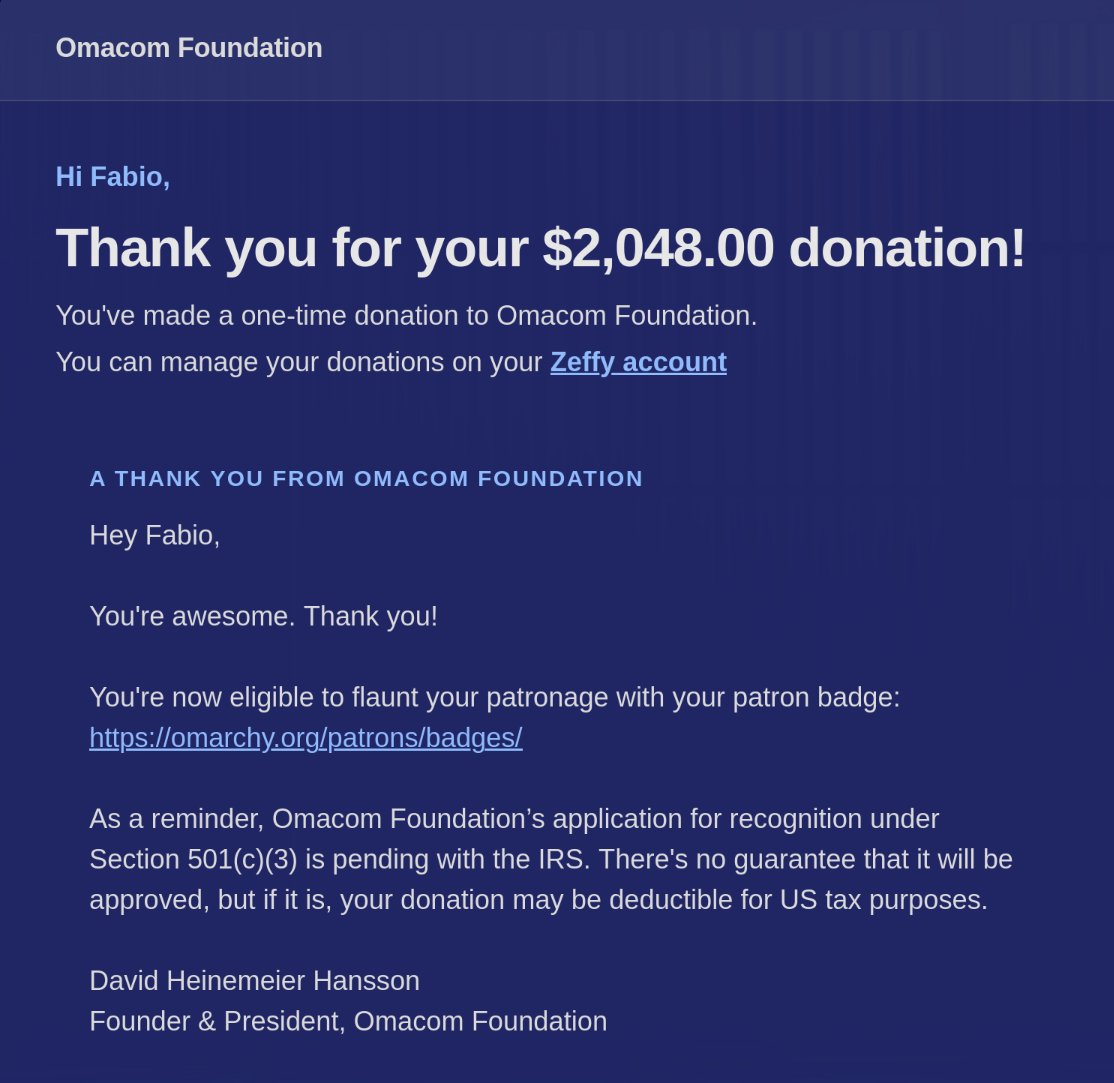
This is the point: the machine still exists, but it lost its power. In 2014 it brought down a CEO in eleven days. In 2026 it can’t even scratch the sponsorship of a niche distro. The documents are still there, in GitHub’s template; what ended was the firepower of whoever wielded them. What changed was the money, and yes, the pushback is also money: eight million dollars from eight rich men.
And before someone points out that money doesn’t prove merit: it depends. A millionaire made by government cronyism, fraud, or favors has no merit at all. But most millionaires made their money by producing, and that’s the case for Omacom’s eight patrons. Money earned by producing is the measure of the merit of whoever earned it, as I already wrote here back in 2011, about Francisco d’Anconia’s money speech in “Atlas Shrugged”.
Judge by the result the donation bought, not by the declared intent of whoever signed the check.
The 49.5 billion corporate dollars from 2020 didn’t produce a single extra gram of measurable diversity, the numbers up above prove that. Eight million dollars from individual patrons produced a full-time maintainer writing actual code. The bubble that funded armies of people with no real work popped, and whoever was left was whoever was there for the code.
The philosophical part
Let’s get to the official excuse: codes of conduct exist to “protect minorities.” On the surface, who would be against protecting minorities? Not me. The problem is that the phrase is vague by design.
What is a minority? I already translated the chapter “Man’s Rights” from Ayn Rand’s “The Virtue of Selfishness” here on the blog. The line that interests me here is from another chapter of the same book, “Racism,” and it remains unbeatable:
The smallest minority on earth is the individual. Those who deny individual rights cannot claim to be defenders of minorities.
And that’s exactly what these codes do in practice: in the name of an abstract, collective minority, the concrete individual gets hunted down. Doxxing (exposing someone’s personal data), harassment campaigns, pressure on employers, bans. When the modus operandi for “protecting minorities” is coordinated bullying against one person until they buckle, you’re oppressing the smallest minority there is.
This topic, by the way, is an old one for me. In December 2018 I published the video “Anti-Parasite Manifesto: Be a Creator” on my channel. At the time I couldn’t be explicit, the thought police were still too strong. But whoever watched closely got the message. It was my breadcrumb for this story that I’m only now able to tell properly.
And there’s the second problem, a more fundamental one: open source is about software. The GPL, which this crowd looks down on so much, solves the one protection a software project can’t afford to lose: the code’s. It guarantees the code stays free, period. It doesn’t ask who wrote it, who they voted for, what they tweeted, what they donated to. The compiler doesn’t check for ideological purity. Open source has always been the most inclusive community that ever existed precisely because of this: the only passport was the diff. The code of conduct made open source less inclusive, because it added a new entry criterion: politics. And politics is a stupid criterion for software.
“But without a code of conduct, how do we deal with real harassment?” With the same tool as always: a maintainer’s common sense and, when necessary, the law. If someone directly attacks another person, sexual assault at an event, for example, banning them is common sense and never needed any document. Harassment, threats, and defamation are already crimes in practically every country, and crime gets settled through the law. What I can’t stomach is something else: going out and stalking someone’s online life to dig up a random opinion, with no relation to any crime, and demanding a ban over words with no criminal consequence. These committees were always great at punishing opinion and terrible at punishing crime, so the document was never about that.
And I’m not the only one saying this. Eric S. Raymond, the guy who wrote “The Cathedral and the Bazaar”, the 1997 essay that validated Netscape’s decision to open-source Mozilla and that pretty much wrote the rulebook for open source, co-founder of the OSI, editor of the Jargon File, author of fetchmail, went on X in September 2025 to declare the code-of-conduct era a complete failure. In his words: ten years of “drama and idiocy”, an “infectious social insanity” that produces politics, intrigue, and negative useful work. The recommendation is as direct as it gets: don’t adopt one; if you already did, delete it. And if some bureaucracy forces you to have one, the suggested replacement is a single sentence:
“If you are more annoying to work with than your contributions justify, you’ll be ejected.”
That’s what I said two paragraphs above: a maintainer’s common sense.
And the detail that closes the loop: ESR himself had been removed from two OSI mailing lists in 2020 over posts that “violated the code of conduct” of the organization he helped found.
The guy who wrote the rulebook, ejected by the document. That image sums up the whole era.
How we got here
It’s worth taking a step back and telling where all this came from, because open source was only one of the fronts. The starting shot, in my reading, was GamerGate, in 2014. In August of that year came the “Zoe Post”, the ex-boyfriend’s rant about developer Zoe Quinn. Twelve days later, and about 48 hours after the #GamerGate hashtag caught fire, about a dozen gaming sites published variations of the same article: “gamers are over,” gamers are dead, it’s finished.
Shortly after, the GameJournoPros leaked, a closed group where gaming journalists coordinated coverage. The public realized right away that gaming press had turned into an ideological club, and hit back with their own version of an organized boycott: the “Operation Disrespectful Nod” campaign flooded Intel with complaints until the company pulled its ads from Gamasutra (the press at the time called it an “anti-feminist campaign”; to me it’s just organized consumer pressure, the same instrument Sidekiq used against Ruby Central further down the line).
And it’s worth pinning down the principle here, because it applies to both sides for the rest of this piece: organized consumer pressure is fair play, no matter which side it comes from. The problem was never pressure. It’s doxxing, threatening someone’s job, and a committee faking neutrality to impose the result it already wanted before opening the process.
For years, from 2021 to June 2025, Wikipedia’s article on the subject lived under the title “Gamergate (harassment campaign)”, treating any criticism of the journalism as a pretext for harassment. The title got switched back to plain “Gamergate” once the most hysterical phase had passed, which should be read as a confession, not as if the case were closed: they renamed it back once defending the political label got too costly, the exact same pattern of quiet retreat that shows up throughout this whole story. While it lasted, it lasted for precisely the decade in which that mob had the firepower to make it stick.
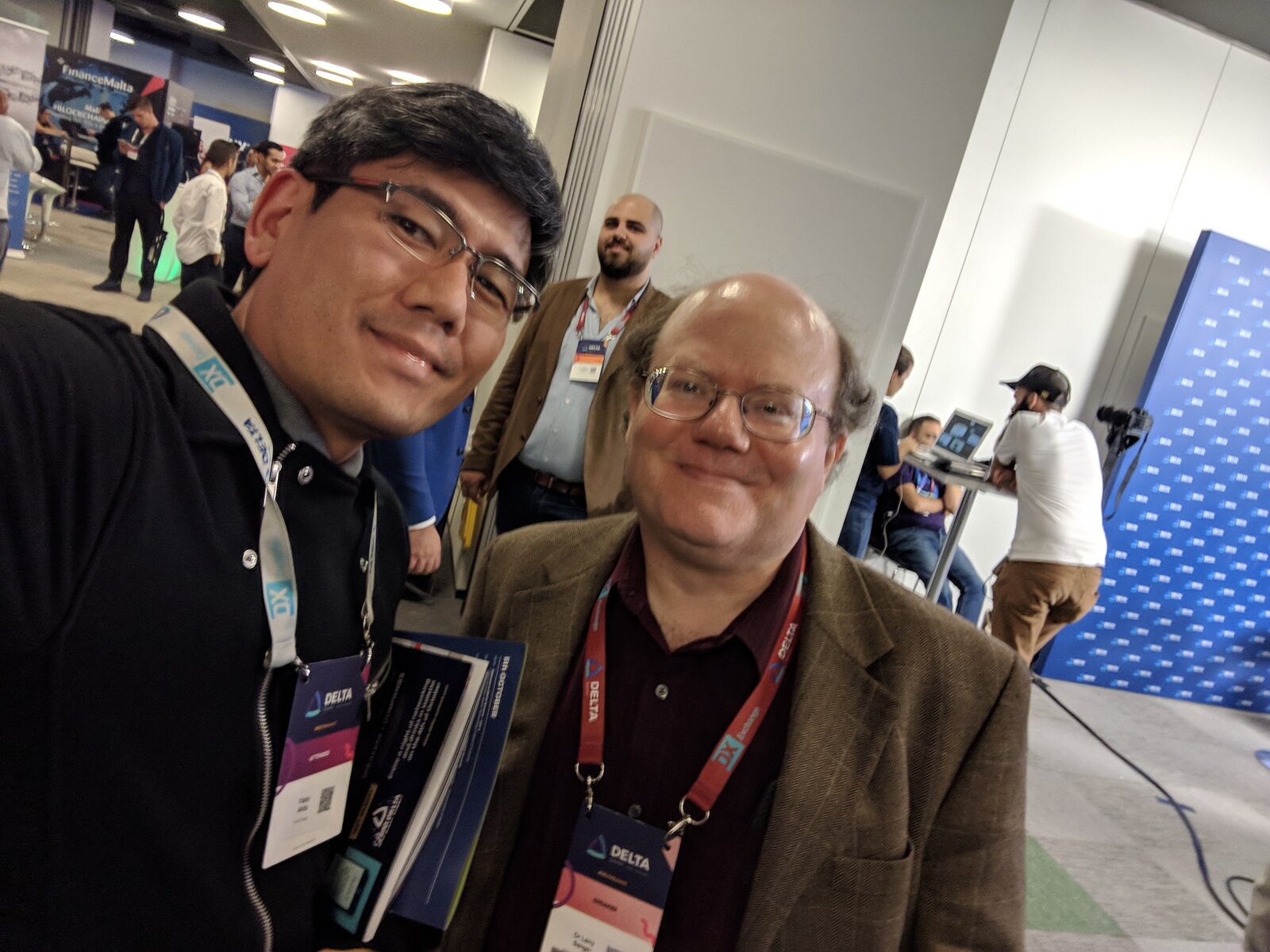
The editorial fight got so ugly that Wikipedia’s arbitration committee sanctioned more than a dozen editors, on both sides. And note that I don’t even need to accuse Wikipedia on my own: Larry Sanger, co-founder of Wikipedia, wrote the piece “Wikipedia Is Badly Biased” in 2020, declaring the project’s neutrality dead, and in September 2025 published “Nine Theses on Wikipedia”, calling for reforms like ending source blacklists and ending permanent editor bans. When the founder says the house has been taken over, believe the founder.
The gamers’ side of this story is in the book “SJWs Always Lie”, by Vox Day, from 2015. I already know what’s coming: “Vox Day” and “Milo Yiannopoulos” are names that make people scream just hearing them, and GameJournoPros, by the way, was also originally broken by that same Milo. I don’t care about the reputation of whoever’s telling a story, I care whether the story is true. A partisan source from inside the fight, fair warning, but the central fact matches what Wikipedia itself and the press at the time document with zero connection to either of those two names: the GameJournoPros list really did exist, a closed group of about 150 people in games journalism swapping notes on how to cover the case.
The chapter “Counterattack” tells GamerGate from the inside, and the book’s thesis sums up the decade: these people always lie, always double down, always project onto others exactly what they themselves do.
From GamerGate onward, it was dominoes. Anita Sarkeesian turned her Kickstarter from a $6,000 goal into $158,000, became a global authority, went to speak at the UN in 2015 about “cyber violence,” and games journalism never recovered. Her Feminist Frequency shut down in 2023, but the logic she kicked off migrated inside the studios: the “inclusive narrative” consulting industry was born, with Sweet Baby Inc leading the way.
Sweet Baby’s CEO, Kim Belair, was recorded at a 2019 GDC talk, a public recording that circulates independently of the site that first surfaced it, advising anyone seeking internal approval for “representation” consulting to “go grab coffee with the marketing team and terrify them” with the possibility of what would happen if they didn’t get what they wanted. In 2024, a Brazilian created a Steam curator page (Valve’s own feature where any account can publish game recommendations and gain followers) named “Sweet Baby Inc Detected.” One employee at the company individually tried to bring the profile down on their own, and Valve also acted through its own moderation; even so, the result was the group exploding to more than 350,000 followers.
And then came the flops. Suicide Squad: Kill the Justice League, with confirmed Sweet Baby consulting, cost Warner 200 million dollars in losses. Unknown 9, from the studio where Sweet Baby’s founding duo used to work, laid off staff en masse a month after launch.
Then came 2020. With BLM, the same playbook became state policy: the 50 biggest American companies pledged 49.5 billion dollars in “racial justice” measures, DEI job postings grew 123% within months, Biden signed an “equity” executive order for the entire federal government on day one of his term, and the European Union rolled out its 2020-2025 anti-racism plan. It was the peak: the patrol had reached the US presidency and the EU’s leadership.
The retreat came as fast as the rise. The US Supreme Court struck down affirmative action in June 2023, companies laid off thousands of DEI professionals, Walmart, Meta, McDonald’s, and Amazon dropped their programs, and in January 2025 Trump revoked the equity orders on day one.
I told all of this just to give context: what happened in open source wasn’t an isolated phenomenon. It was the same script, with the same methods, across every culture and tech industry at the same time. The difference is that in open source, the resistance took longer to organize. But it organized.
My Cortlandt
It was this pressure that pushed me out of organizing RubyConf Brazil. I founded the event in 2008, back when it was still called Rails Summit, and in the last edition I organized, in 2016, we drew 1,500 people. When I announced my departure, I wrote that there was no drama involved. That wasn’t the whole truth: the patrol had already reached tech conferences, and I refused to turn the event I created into one more stage for it.
Let me give a small example of what it means to be pressured into forcing diversity. As the data I showed above indicates, women are somewhere between 3% and a bit over 13% of open source contributors, depending on how you measure it: self-reported survey or name-based detection in commits. My channel’s analytics show the same range, 3 to 5% at most, and that proportion hasn’t changed in ten years. Every year I opened a public Call for Papers: anyone could submit a talk. And my selection process was always blind: I read every submission without knowing who had sent it, on purpose, so the choice would be based on the merit of the topic and never on the person.
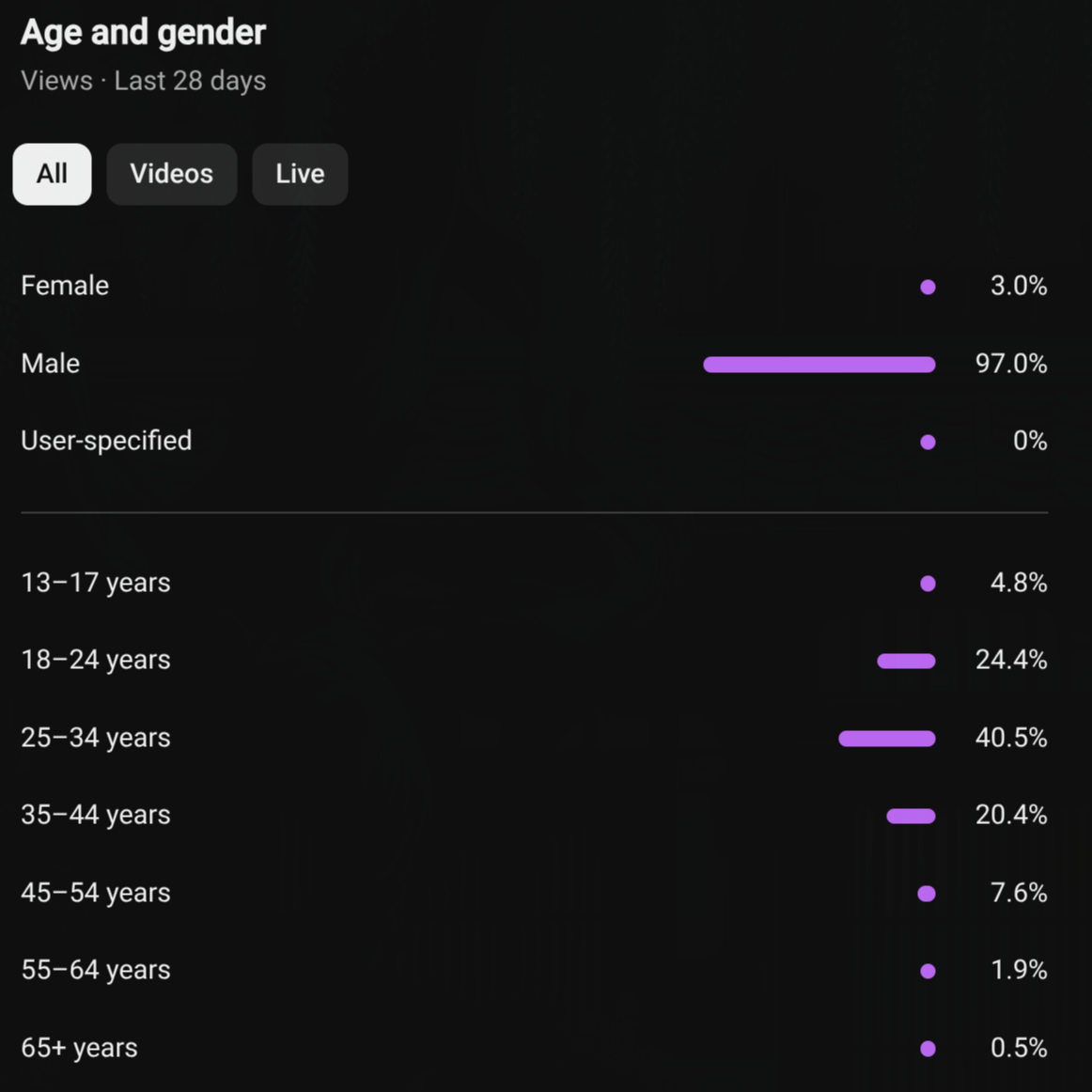
In the patrol years, the pressure was never direct with me. It was that diffuse, external pressure that every event had to be “more diverse.” And in practice that could only mean one thing: a new phase in the process. After the blind selection, reveal who submitted what, to check whether the lineup was “diverse enough.” Except that’s a mathematical impossibility. Submissions kept following the same 3 to 5%. Even approving every woman who submitted, the imaginary quota didn’t add up. The way around it was to go out and invite people directly, choosing by profile instead of by topic.
And the practical result of that scheme, wherever it’s applied, is cutting people who got in on merit to open a spot for people chosen by an irrelevant external policy. That drags the event’s quality down instead of up. And notice: this isn’t an argument against any woman. It’s the opposite. The moment the quota enters the process, the doubt stops being about one specific speaker and starts hanging over everyone who steps on stage. It doesn’t matter who’s talking: if someone in the audience disagrees with the content, there’s always the leftover question, “did Akita pick this one for the quota?” From then on, every speaker carries a suspicion they don’t deserve, and everyone’s merit gets devalued along with it. It hurts the minority the policy claimed to protect, it hurts the other speakers, it hurts the audience. It’s lose-lose all around.
And there’s a part of this story nobody sees from outside. Some of the people invited that way turned it down on the spot, “because the event wasn’t diverse enough.” The refusal made the event even less diverse, obviously. And afterward they’d go on social media to trash the event, as if I’d never invited anyone. That’s the level of garbage I had to swallow every year.
And let this be very clear: there’s nothing I want more than to see more women in tech. What I can’t convince myself of is that forcing a quota, the way I described above, helps with that. Everything I saw in practice points the other way: it hurts more than it helps. And if I don’t believe it’s beneficial, I’d rather not do it.
Want a recent example of a woman I admire in the industry? Asha Sharma, who took over as Xbox CEO in February. Since then it’s been one result after another: she cut Copilot from the consoles and restructured the division to focus on what matters, sold studios and cut costs without cancelling a single announced game, and this week brought Kojima Productions to Xbox to publish Hideo Kojima’s next game, after PlayStation cancelled the project in mid-2026. Notice the discourse around her: zero mention of “gender,” zero agenda.
Just numbers: cut unnecessary costs, bet on the right calls, improve value for the customer. That’s merit. You don’t need DEI for that.
Until I decided enough was enough. Anyone who’s read “The Fountainhead” knows what I did: like Howard Roark, the architect who blows up his own building when they tamper with his design, I dynamited my Cortlandt. More precisely: the event as it existed while it was mine. The brand survived a few more years in other hands, without the same soul, until it disappeared. And I had already signaled this philosophy here on the blog back in 2011. An individual does nothing for others: he does it for himself. If what you build benefits other people as a side effect, great, but that was never the reason. When the parasites try to take what you built, you blow it all up yourself. Because you can. Whoever built it once builds it again from scratch.
That’s what I did. I traded the conference for my YouTube channel, which didn’t depend on a sponsor, a committee, or anyone besides me. And the channel grew way beyond anything the conference would ever have become. Then I sat back and waited for the bubble to pop, because I knew it would pop: I wrote it here on the blog and repeated it in videos years before it happened. It popped. Patience always wins.
Conclusion
Ten years of codes of conduct, and here’s the scoreboard: zero evidence it increased diversity, no toxicity baseline to compare before and after, and the most recent and most rigorous causal study that exists shows the document pushing out old contributors more than it builds new community. The promise was to protect minorities. The delivery was a collection of heads: the creator of JavaScript, the creator of the GPL, the creator of Linux, all put through the public humiliation ritual. None of it over code. All of it over opinion.
And notice how this era ended.
The machine didn’t lose the argument, it lost its funding.
It was only once easy money ran out that the armies of people with no real work evaporated, and whoever was left was whoever was there for the code. Meanwhile, the builders kept building: Brendan Eich got pushed out of Mozilla in 2014 and founded Brave the following year, today with more than 100 million monthly active users and a valuation near a billion dollars. DHH lost the keynote and created a bigger conference, lost a third of the company and helped raise an eight-million-dollar foundation. I left my conference and grew far more on my channel. A parasite can take an institution. It can’t take the ability to build. Whoever built it once builds it again from scratch.
Open source recruits volunteers who want to contribute code. Any discussion that doesn’t involve code is a distraction at best and sabotage at worst. And the answer to “what do we put in place of the code of conduct” fits in a single sentence, one the ESR already wrote: if you’re more trouble to work with than your contributions justify, you’re ejected. That’s always been how it worked. The only passport is the diff.
The rest is politicking. And politicking, to use the precise technical term, is bullshit.
And here’s the final practical recommendation. If your open source project has a CODE_OF_CONDUCT.md, delete the file. If your main branch turned into main in the 2020 wave, rename it back to master. Partly out of spite, I admit. But mostly to exercise the freedom you just got back to do this without being cancelled for it. Freedom you don’t exercise atrophies. No clarifying note, no committee vote, no asking anyone’s permission. Just because you can again.